
First Job After a Lifetime of Work
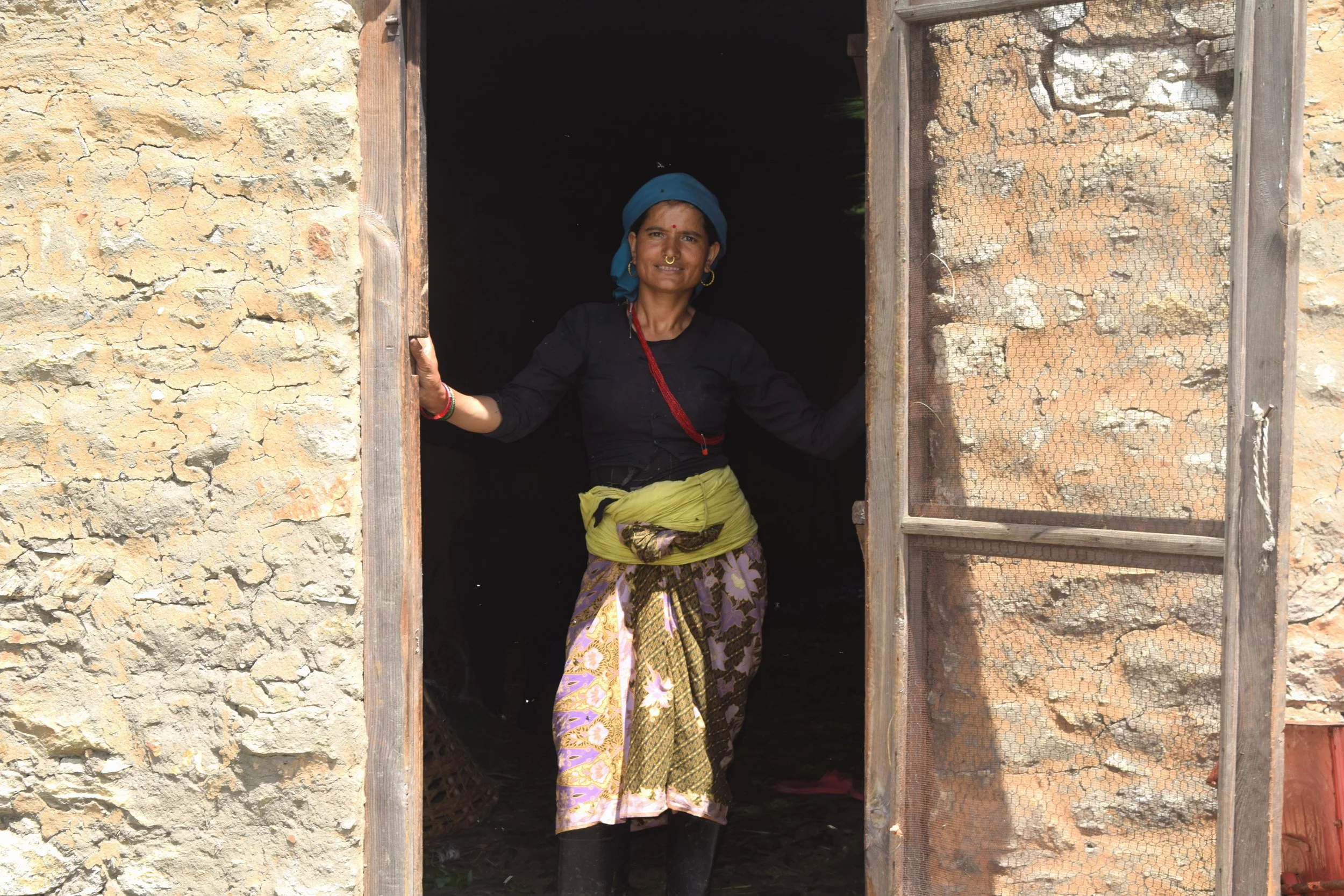
I first met Hoijali didi at an interview for a position at Karnali Ratna Private Limited, an agriculture for profit company led by women of Oda, Kalikot.
For her, it was the first job interview of her life. The work itself was not unfamiliar. Hoijali had spent most of her life working. Her days had long been filled with the things that keep a household and a farm going: looking after her three children, feeding and caring for goats and other livestock, cutting grass, farming, cooking, cleaning, and tending to the countless small responsibilities that make up a day at home.
What was unfamiliar was being interviewed for that work, and the possibility of being paid for it. She had come because she wanted to earn.
Nearly two months after she started working, I spoke to her again. It was a sunny day, and she was in the buffalo shed, cleaning. She continued working as we talked, occasionally leaning against the door beside her.
Hoijali is a mother of three. Until recently, almost all of her work had been within the home and farm. She did not have a monthly salary to call her own or money that came into her hands because of the hours she spent working. Her days were full, but they did not come with a regular income.
Then her family's circumstances changed.
It has been around a year since he got sick, she told me. Before that he used to travel to India for seasonal labour and that is how we managed money.
Before his illness, Hoijali's husband travelled to India for seasonal labour, including stone-breaking, to support the family. When he became ill and could no longer work, that source of income stopped. His treatment also left the family with accumulated loans.
There were children to care for, food to put on the table, school expenses to manage, and a husband whose treatment had to continue. That is what forced Hoijali to look for work that would somehow keep the house running.
The work she does now looks familiar to what she has been doing. She cares for buffalo and other livestock, cuts grass, and carries out agricultural work. Her hands are doing many of the things they have always done.
When I asked whether the work was difficult, she did not romanticise it.
Every work is hard. If you don’t struggle, how will you earn? I work like I used to work at home, with my whole heart. Just because it is an organization, doing the work half-heartedly is not good. To earn, you have to put in your sweat.
This wasn't actually the first time Hoijali had earned money. She remembered a stretch when she carried materials from Birtamode, the last point vehicles could reach, up to the village, earning around NPR 700 a day. But that was day labor. The work was not regular, and the pay was tied to whatever day it landed on.
This time was different. Now she had steady work and a salary she could count on.
Her income isn't enough to wipe out the family's debt. It won't clear the loans that piled up from her husband's treatment. The family is still figuring out what they can afford and what they can't. But, as she puts it, I can now buy food. I can buy cooking oil. I can buy notebooks and pencils for my children.
Written down, these might sound like small things. But for a woman living in one of the remotest parts of the country, they carry real weight. When a child needs a notebook for school, when the kitchen needs something, when a household expense comes up and she can pay for it with money she earned herself, those small moments give her a bit more say in how her family gets through the day.
Nothing about her situation has changed completely. Her husband's illness is still there. The debt is still there. The responsibilities of caring for her family are still there. But now she has another way of dealing with all of it. She also talked about a change she's noticed outside her home.
In the past, when I went to the shops and needed to buy things on credit, they would hesitate because they weren't sure I could pay them back. Now I can take things on credit more easily. Everyone knows I work and that I'll get paid, so they trust that I'll pay them back once I get my salary.
With the job and financial security, her position in the community has shifted too. For Hoijali, that income gives her something she didn't have before, a steadier way to contribute to her household, and a say in some of its everyday decisions.
Women have always worked, in homes, on farms, with livestock, in caring for their families. Much of that work keeps households and communities running, but it often goes unpaid and unseen as real economic work, while women stay in the back seat when it comes to decisions.
Hoijali never stopped working a day in her life. But this time she found a name for it, a wage attached to it. There are hundreds of other women like Hoijali who have not found a name for the work they do every day, work that keeps them pushed back from decision making in their own homes.