
The Sound of the School Bell
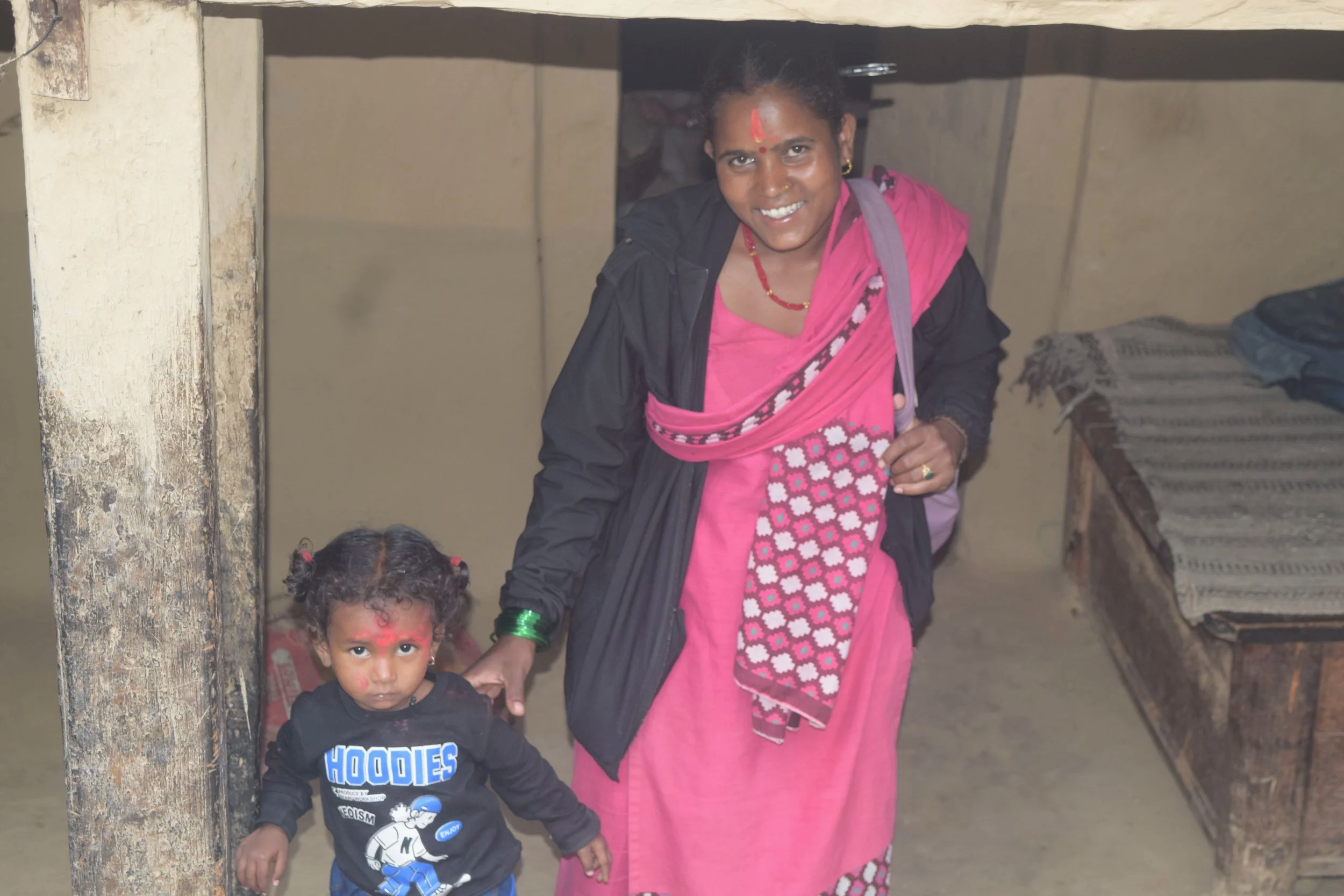
Jasudha’s journey to education
Jasudha Pariyar was still a child in all the ways that mattered when she got married at the age of fifteen, learning to be a daughter-in-law in Oda, a small, remote village in Kalikot. Yet her days no longer belonged to childhood. While she was learning to meet the demands of housework and new responsibilities, her attention often drifted outside the home, toward the village path. There, children her age passed by in blue uniforms, with schoolbags hanging from their shoulders. From the threshold of her house in the hills, she would watch them quietly. It felt different inside me when I saw other children going to school. It felt unpleasant, she says. Even in the middle of work, her thoughts would return to the rhythm of the school day, especially the sound of the bell. She was never able to pay attention to the housework, but instead her attention was always outside to the children going and returning from school. Sometimes, when she came across old, discarded books, she would bring them home and read them whenever she could.
Today, at twenty-three years old, Jasudha sits at the centre of a classroom around the students as a full-time Grade 1 teacher at Dev Secondary School. Her monthly salary of 20,000 rupees sustains an entire household, covering food for her children, medicines for her in-laws, and the everyday needs of a family that now depends largely on her income. But this present life did not begin in the classroom. It began in a childhood shaped by poverty, where even basic needs were uncertain.
Jasudha is the youngest of three siblings. Her father died when she was two years old, and her mother was left to raise the children alone in a village where hardship was constant. The situation became even more fragile when her older brother left for India for labor work and died there when she was seven. With no adult male in the household, economic instability deepened further. Her mother later remarried and brought the children into a new household, but the relational dynamic shifted. There were stepbrothers, a stepfather, and a growing feeling that she did not fully belong. I had a mother and, of course, a father too, she says, but it was not comfortable enough to share everything. There was no one to tell me what was right and what was wrong.
When she was around ten years old, she got connected to a non-profit organisation that brought her to Kathmandu for schooling. For five years, she lived in the city away from her village and attended school there. Those years opened a different world to her, one where classrooms, books, and learning gave hope for a better future. But she eventually returned to her village as a young teenager, with the hope of continuing her education.
Soon after coming back to the village, her life took a different turn than what she had planned. Listening to villagers and believing promises she wanted desperately to trust, she eloped at fifteen. They told me they would take me to Kathmandu and put me in school, she says. That is how they convinced me. I came from the greed of education, and I was just a kid at that time, she continued with a faint, self-aware smile, laughing at her own naivety.
When she arrived at Oda from her village nearby in Kalikot, the promise of education quickly disappeared. This is Kathmandu for you, don’t dream of studying, she remembers being told. Life then moved into housework, responsibility, and silence filled with tears for the life she wished to have. Yet education did not leave her. Even in that environment, she continued to dream of education while watching other children of her age.
By the time she was sixteen, she was pregnant with her first child. Around that same time, the Oda Foundation Nepal was running tuition classes for children in the community. She joined these classes, and also continued school, telling her family she was unable to focus fully on housework and wanted to study. Villagers mocked her, questioning why she continued to pursue education while preparing to become a mother, but she did not stop. She attended classes during pregnancy, while continuing to attend tuition at the foundation. I went to school and tuition, and also studied at night after everyone was asleep. People used to talk a lot, but I did not listen to them and wanted to show them that I can be something. Jasudha says calmly.
After Grade 8, financial hardship made it impossible for her to continue schooling. She believed her education might end there. But with the support of the Oda Foundation, she continued. Even after giving birth, Jasudha attended tuition classes, while staff at the Oda Foundation looked after her child during lessons so she could continue learning. Without them, she says, I would not be here today. They would carry my baby while I studied. With this support, she completed her SEE and slowly rebuilt her educational journey.
She would walk for hours in the dark to reach exam centres, sometimes leaving home at five in the morning. For high school examinations, she even carried her child with her. Alongside her studies, she began teaching in tuition classes, translating lessons from English into Nepali for younger children. Education was no longer only something she received; it became something she passed on.
Today, Jasudha teaches Grade 1 full-time. She has been working as a teacher for three years while raising two sons and managing the full responsibility of her household. Her husband works seasonal labor in India, and most domestic and financial responsibilities rest on her shoulders. Despite this weight, she speaks of her work with deep commitment. This job is huge for me, she says. There are many who are not getting this opportunity, but with the support of the foundation and everyone, I am here today. I don’t want to lose this chance. I want to keep teaching no matter what happens. I am ready to face any hardship in the future.
Jasudha hopes to continue her education to a Bachelor's degree and get a teacher's license in the future as her children continue to grow up. In the past, I was alone and struggled so much. Now I have children, so I can do anything. I need to work for their future. No matter how my life is, their life should be good. Her story is not only one of struggle, but of persistence within a space where education was never guaranteed. Because of class, geography and gender, education and opportunities for Jasudha were always at the edge, always at the risk of slipping away. Yet Jasudha held on to it with courage, continuing to dream, hope and learn as she still does today.